
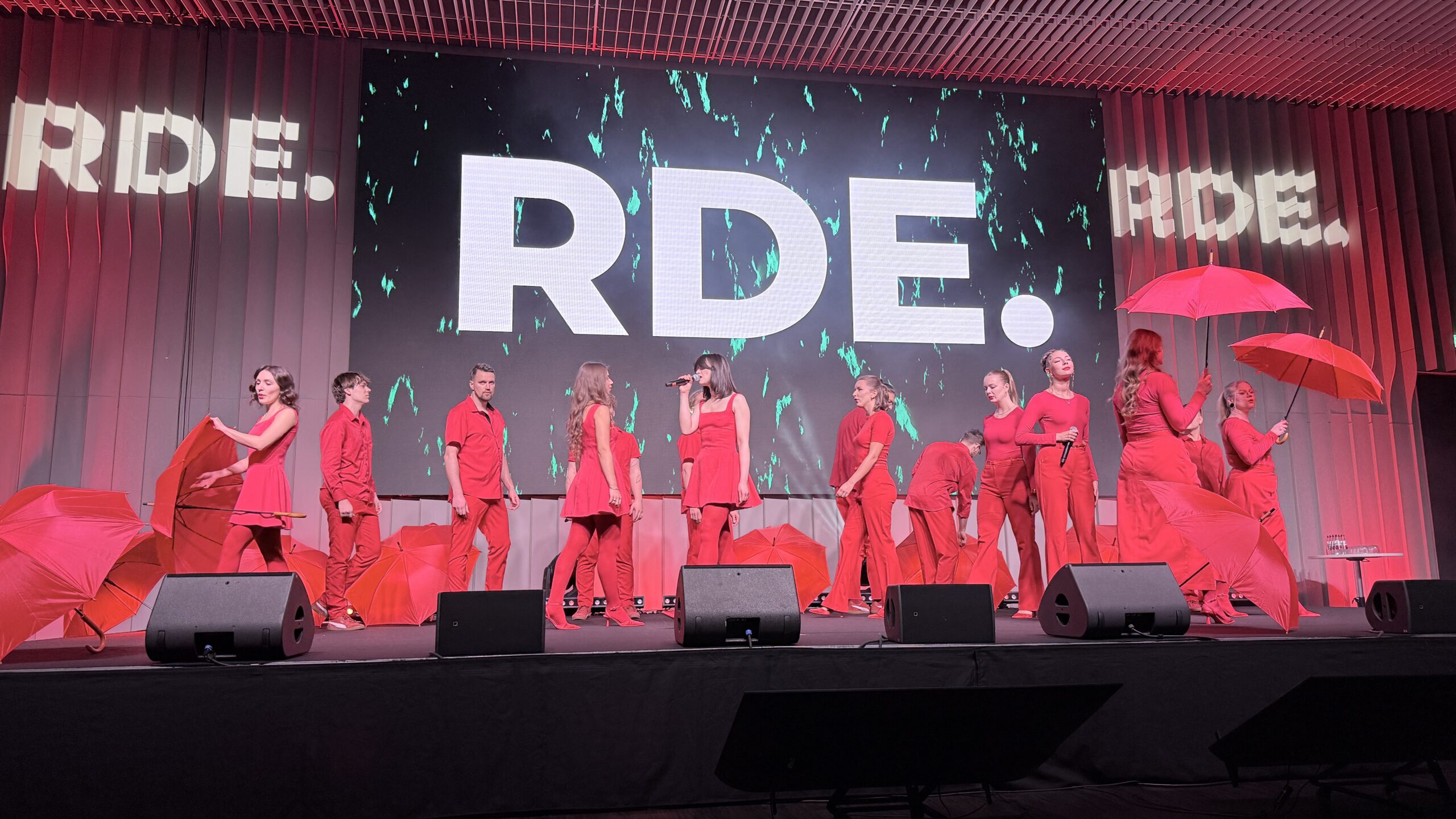


The future of radio is collaboration, human interaction, and a bit of AI – that’s the takeaway from Radiodays Europe 2026 during the last few days in Riga.

With the help of all the amazing team at the event who blogged every session, we bring you a summary of what happened from some of the sessions.
You can also see lots of interviews and quotes from the event as it happened on the RadioToday Instagram account.
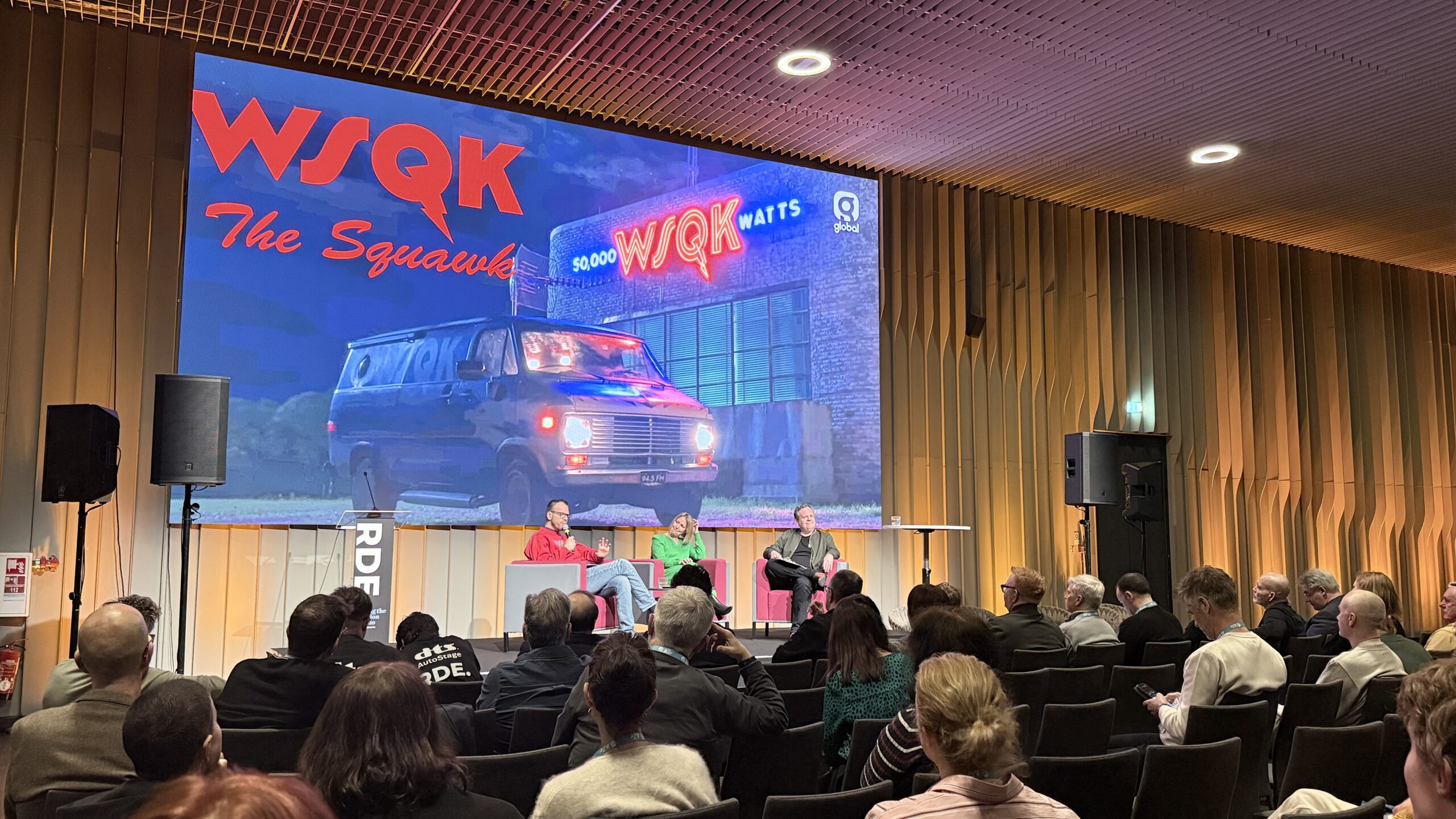
The opening event featured the Riga Red Choir after a day of Summits, including a very interesting behind-the-scenes look at WSQK The Squawk from Global, and a session from Heart’s Matt Wilkinson on how to create the perfect seque.
It centred on audio’s next chapter, mixing local performance with a wider message about where radio goes next.
Hosted by Boom Radio’s Paul Robinson alongside Radio Skonto’s Rita Paula, the opening hour set out the main themes for the conference from the start: how audio can grow without losing its identity, why human connection still matters in a fast-changing media world, and how broadcasters need to balance innovation with trust, creativity and purpose.
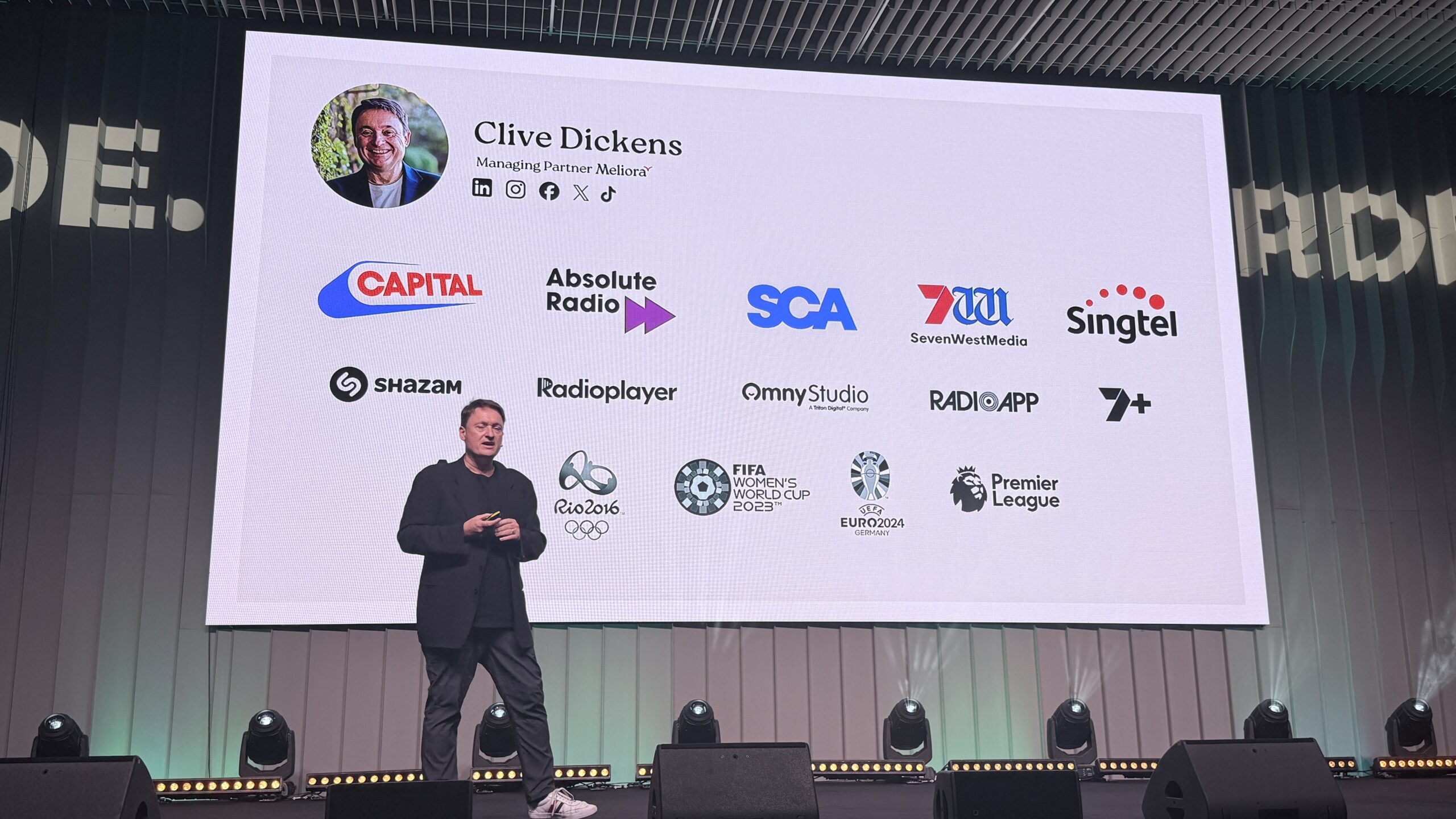
The strongest UK-linked contribution came from Clive Dickens, who framed the industry’s biggest pressures as consumption, sustainability and investor confidence, but argued the answer is collaboration rather than retreat.
The session also underlined the importance of radio in cars and the need for closer work with vehicle makers, while keeping FM and broadcast radio visible as dashboards and listening habits change.
Commercial radio faces key turning point
A panel on commercial radio’s future brought together Steve Jones, Simon Myciunka and Kari Laakso for a discussion about audience movement, revenue and platform change. The message was that radio cannot wait for the future to happen to it, and that strong content still sits at the centre of everything.
From a UK angle, Bauer’s Simon Myciunka said advertising remains the main funding model, even as paid options grow, and argued the industry needs better, more creative ad experiences if it wants to stay effective. The panel also returned to a familiar Radiodays theme by warning that radio’s place in cars can no longer be taken for granted.
DAB+ remains central to radio future
The DAB+ session made the case that digital broadcast is becoming more important, not less, as countries decide how to modernise radio. WorldDAB speakers argued that DAB+ offers lower transmission costs than FM, better resilience than online-only delivery in emergencies and more room for services to grow.
There were several UK references in the examples used, including Absolute Radio’s extension brands on DAB+ and The SQUAWK, a pop-up service created with Global and Netflix to support Stranger Things. The broader argument was that DAB+ growth depends on coverage, content, devices, cars and long-term collaboration between broadcasters, regulators and policymakers.
When radio stars leave the brand
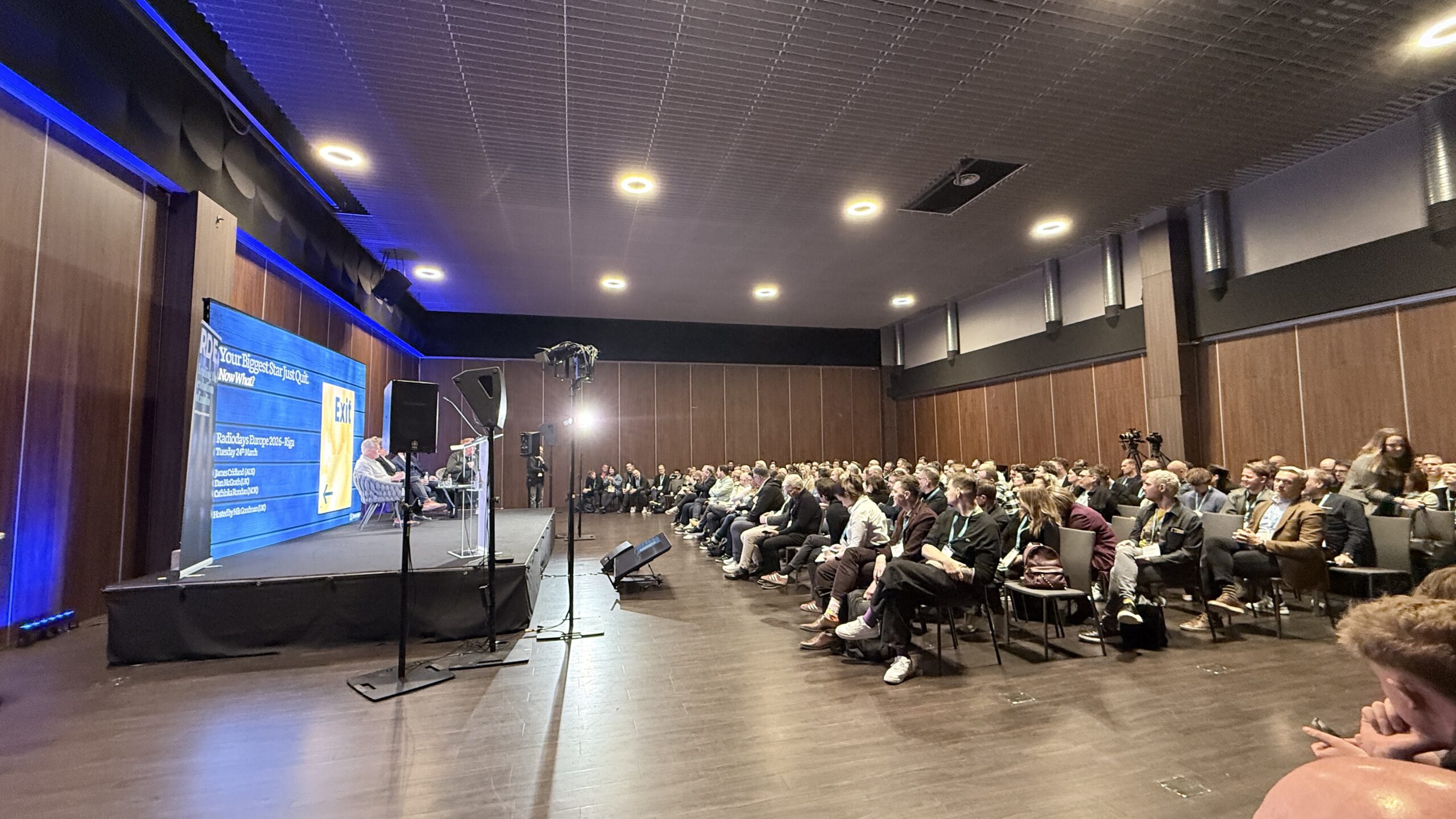
James Cridland’s session on radio brands surviving major talent departures looked at what happens when a presenter becomes bigger than the station. Drawing on cases including Chris Evans and the Kyle and Jackie O show, the panel argued that broadcasters put themselves at risk when too much value sits with one star name.
From a UK perspective, the discussion around Chris showed how creative freedom, side projects and growing tension over expectations can destabilise even a successful show. The wider conclusion was that succession planning matters just as much as star power, and that stations which invest in the brand as well as the presenter are in a much stronger position when change comes.
Human connection still drives radio
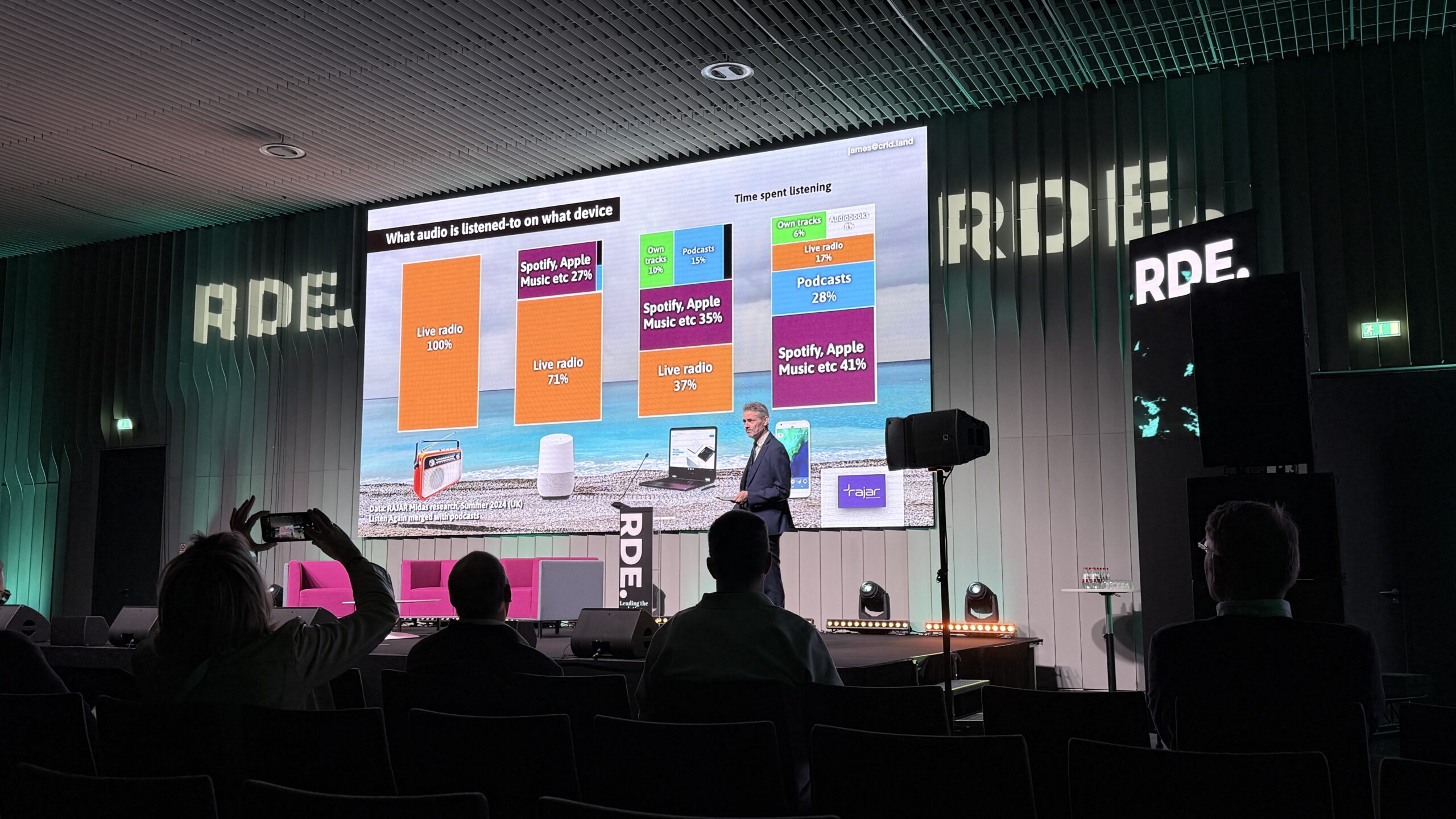
James’ wider session on the future of radio returned to one central point: radio’s advantage is still human connection. Using data from multiple markets, he showed that younger audiences are spending more of their audio time on smartphones, streaming and podcasts, while traditional live radio is no longer the automatic choice.
UK listening trends were part of that picture, with overall hours described as broadly stable over the long term even as younger people listen less and older audiences slightly more. The practical takeaway for broadcasters was to lean further into spoken word, shared experiences and audience participation, because those are the things digital platforms still struggle to copy.
BBC Radio 1 driving music discovery
The BBC Radio 1 session on breaking new music focused on how the station is trying to make discovery feel relevant to younger audiences. Aled Haydn Jones, Jack Saunders and Daisy Jarrett described the New Music Show as a curated, multi-genre space built around trusted selection, context and shared excitement.
The strongest headline point from the session was Radio 1’s claim that 52 per cent of new music exposure in the UK comes from the station. Jack’s role was presented as more than simply introducing tracks, with the emphasis instead on explaining why music matters and creating a programme that works across radio, social media and modern listening habits.
BBC approach to podcast visualisation
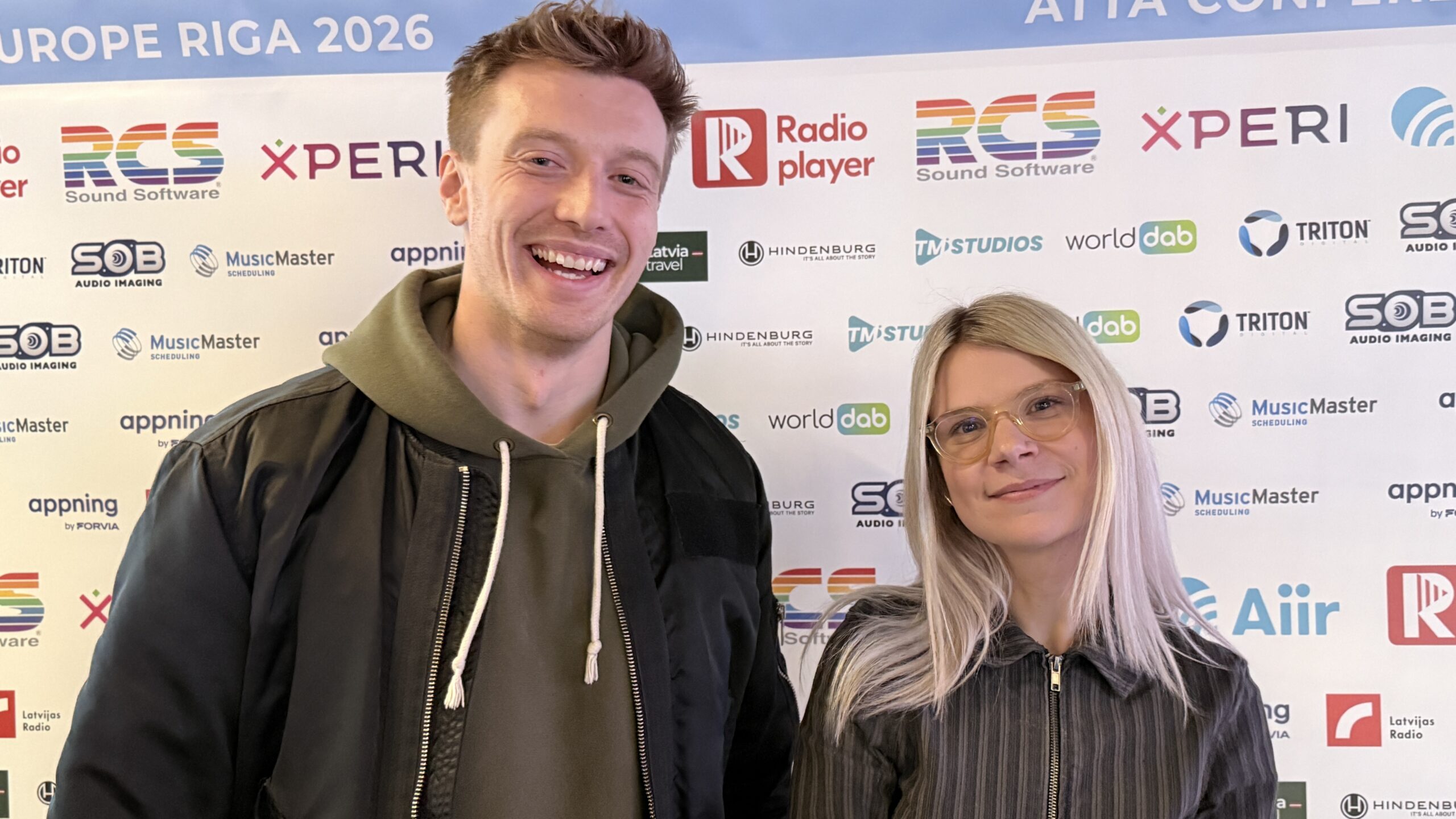
The session on podcast visualisation argued that video should be used selectively, not as a default add-on for every show. Guang Jin Yeo and BBC commissioning executive Stevie Middleton said younger audiences increasingly discover podcasts through visual platforms, making video a route to attention rather than a replacement for audio.
The BBC examples focused on designing projects from the start for audio, video and social, with separate versions for each platform and workflows that can be repeated at scale. AI was presented as a useful production tool, but the session kept coming back to human editorial judgement and discoverability, with packaging and presentation seen as essential in a crowded digital space.
Tech shaping media and society ahead
Amy Nordrum’s keynote looked well beyond radio and into the technologies that could reshape daily life, work and society. Her list ranged from sodium-ion batteries and AI coding tools to base editing, commercial space stations and embryo scoring, with a strong focus on both promise and risk.
Rather than treating innovation as a series of isolated breakthroughs, the session framed these developments as forces that will affect ethics, the environment and public trust. For broadcasters and audio companies, the wider point was clear enough in the room: these are the kinds of shifts that will influence how audiences live and what they expect from media in the years ahead.
Youth Forum challenges radio’s future
The Youth Forum ended the conference with a direct challenge to radio about how it serves younger audiences. The session brought together 30 young attendees from across Europe, including people working in journalism, programming, social media and student radio, and asked them to spell out what turns younger listeners away.
The main message was that young audiences want authenticity, emotional honesty and the chance to take part, rather than being spoken at. The session also included a BBC link through Sam Bonham, who was referenced as a former participant in the earlier Next Gen scheme and is now a senior BBC editor, showing how Radiodays’ younger talent strand can feed into major broadcasters.
Why sonic branding still matters
Branding and imaging were presented as a core part of radio strategy rather than decoration, with Thomas Giger, Phil Tozer and Tamara Orbán-Mikus arguing that sonic identity now does much of the heavy lifting in a crowded audio market. The panel said stations need a clear, ownable sound that fits the wider experience across platforms.
One of the main UK examples was BBC Radio 1’s single-note sonic branding, highlighted as a bold move that worked because it was distinctive and memorable. Kiss UK was also mentioned as a case where taking a more original direction paid off, while the wider advice was to keep branding short, clear and consistent rather than cluttering output with too many messages.
Audio and video working together
The session on audio and video working together made the case that the two formats should be treated as partners rather than rivals. Robyn Ree and Róisín Reilly argued that short-form video helps audiences discover content, while audio is where deeper engagement and loyalty are built over time.
The practical advice focused on building a social-to-audio path, getting teams aligned early and making more use of each interview or feature by turning it into multiple clips and formats. The central idea was straightforward: video can stop the scroll, but audio is still the place where a stronger relationship with the listener is formed.
Creative radio promotions that engage audiences
Niall Power’s session on radio promotions showed how strong ideas can still cut through whether they are simple or large-scale. Examples ranged from low-cost mechanics to bigger stunts, but all were built around the same principle that radio works hardest when listeners feel part of the story.
One of the most notable UK mentions was Match Ball Mission, where a presenter completed a 260-mile challenge and raised more than £1.5 million for charity. Across all the examples, the session argued that the best promotions are not really about prizes at all, but about creating moments people want to follow, talk about and join in with.
AI news tools not yet reliable
The EBU and BBC-backed session on AI assistants and news offered one of the starkest warnings of the conference. Based on a study across 18 countries, 14 languages and four major AI tools, speakers said these systems are still far too unreliable to be trusted as news providers.
The BBC link was central, with the corporation involved in the research behind findings that 45 per cent of answers contained a significant issue, from bad sourcing to missing context and inaccurate information. The resulting message was blunt: if AI is going to deliver news responsibly, it must be grounded in trusted journalism rather than scraping and distorting it.
Classic hits formats finding new audiences
A session on classic hits argued that heritage music formats are growing again because they offer more than a playlist. Nik Goodman, Andy Ashton and Tom De Bock said successful stations are building a recognisable experience around trusted music, familiar voices and a clear sense of identity.
The UK examples were front and centre, especially Greatest Hits Radio and the role Ken Bruce has played in strengthening the brand. The session said younger listeners are also finding value in older music, not as nostalgia but as discovery, which is helping classic hits feel current again when paired with a smart digital strategy.
Jingles and AI shaping station sound
The later jingle session also focused on branding, but with more attention on execution and automation. Chris Ward and Melvin Sleeking argued that sonic branding works best when it is treated as part of a station’s whole identity, with audio markers designed to fit mood, tempo and audience expectation rather than interrupt them.
The discussion leaned heavily on technology, with AI-powered systems described as a way to match jingles and imaging more closely to songs in real time. Even so, the underlying point was familiar: strong creative thinking has to come first, because automation only works properly when the station knows exactly what it wants to sound like.
Public service media under pressure
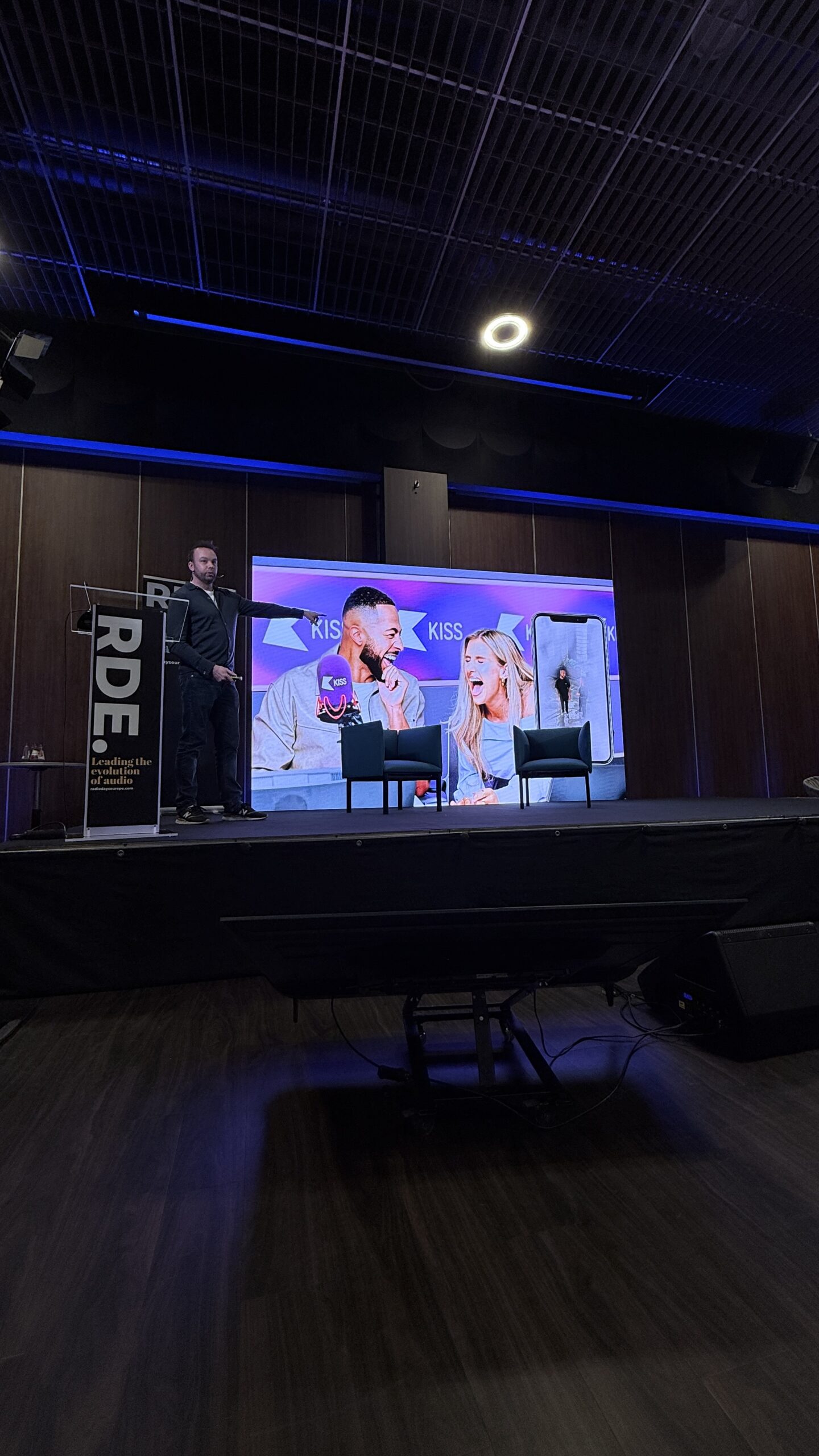
The panel on public service broadcasting said the sector remains essential, but cannot assume trust alone will protect it. Speakers from Swedish Radio, NPR and Radio France argued that public broadcasters face real pressure from funding uncertainty, shifting audience habits and growing competition from global platforms.
Although the examples were international, the themes will sound familiar to UK radio too, particularly around younger audiences, platform dependency and the role of AI in journalism. The discussion kept returning to one key point: public service media can adapt, but only if it protects the human editorial judgement and credibility that make it different.
Radio distribution model facing change
Steve Jones’ session asking whether radio is really dying deliberately started with a provocation before turning into a warning about distribution. His argument was that audio itself is thriving, but the old delivery system of transmitters and built-in receivers is no longer enough in a world shaped by software, apps and connected cars.
The talk’s strongest line was that radio is now part of software rather than hardware, meaning dashboard access can be altered or removed by others. That led to his DASH framework around distribution, aggregation, software and habits, and a clear conclusion that broadcasters have to think far more strategically about where and how people find them.
Dashboard becomes key radio battleground
The dashboard session backed up that point with a more practical look at radio’s battle for visibility in connected cars. Speakers from Radioplayer, the BBC, Renault and others said radio is no longer just competing on air but against every other digital option built into the vehicle.
The UK was mentioned as one of Europe’s stronger markets, and the BBC’s Sarah Harrison said one in five people in the UK only listen to radio in the car. That made the stakes obvious: if radio is hard to find or use in the dashboard, broadcasters risk losing a large slice of listening that may not simply transfer elsewhere.
Lessons from politics for radio
The session on campaigning drew lessons from Donald Trump’s communication style and asked what radio could learn from it. Julius van de Laar argued that modern political messaging is increasingly driven by emotion, identity and entertainment, with podcasts and social media helping politicians go direct to audiences.
The takeaway for radio was not to copy politics but to understand how attention works now. Strong positioning, emotional clarity and audience connection were all presented as essential, though the discussion also acknowledged the tension between being engaging and staying credible, especially for broadcasters that still depend on trust.
And on to next year!
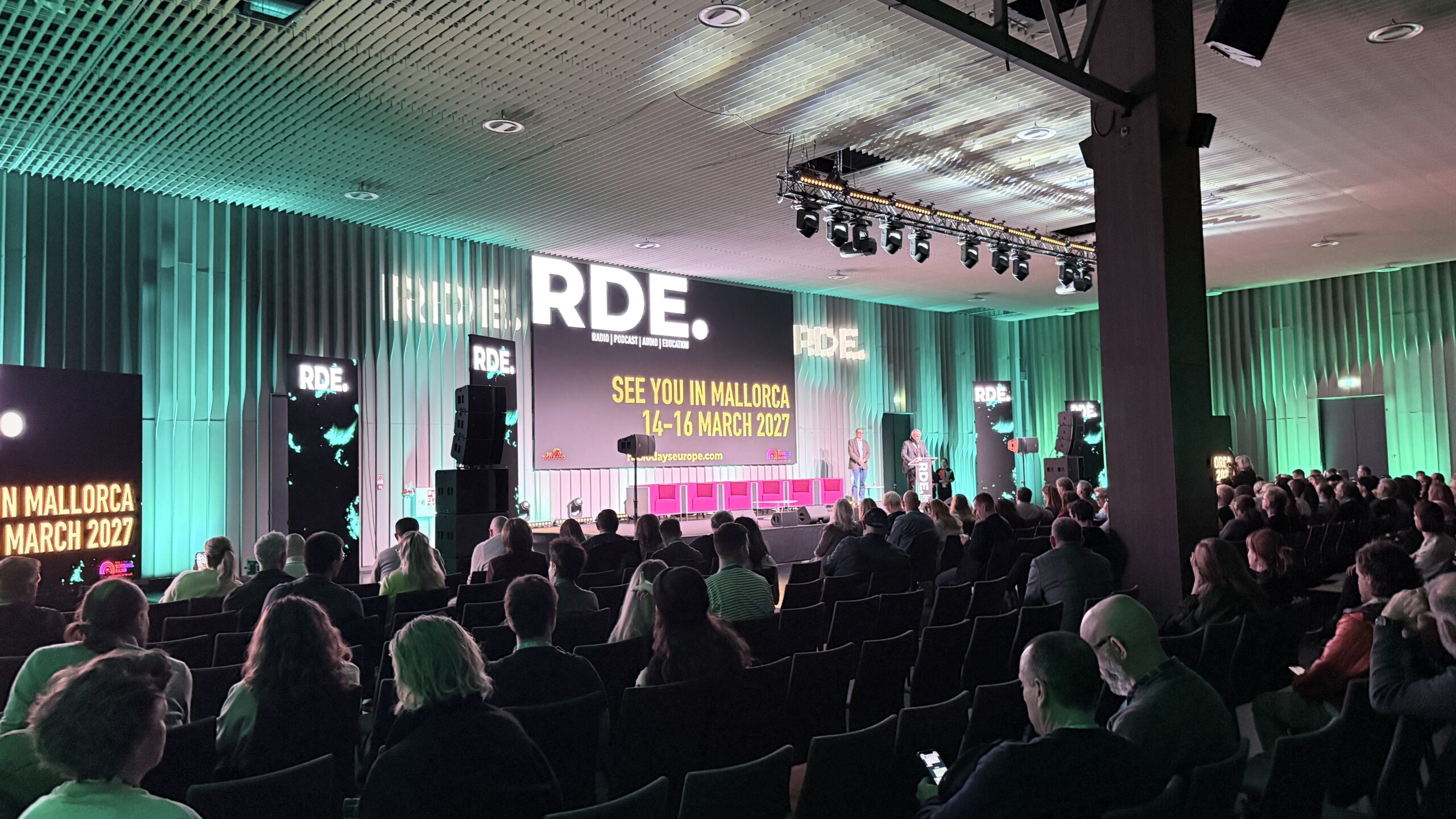
Finally, we found out that Palma will be the host for Radiodays Europe 2027. We’re already booking the RadioToday villa. See you there!