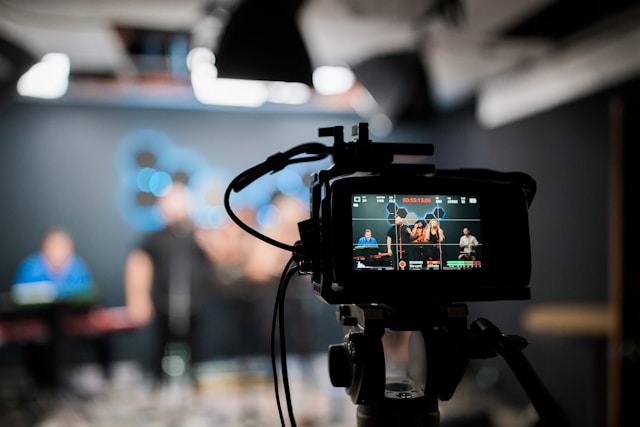





Radio has gone through quite a bit of change in recent years.
A few years ago, “radio” meant wireless in the garage or FM radios in the kitchen or car. Fast forward to 2026, and it sits in the same attention economy as TikTok, Netflix, YouTube, Spotify, mobile games and podcasts, each designed for personalised, on-demand consumption.

Yet, the cornerstones of radio remain remarkably resilient – the Radio Joint Audience Research (RAJAR) institute found that the medium is still listened to by nearly 50 million of us, who spend on average 20+ hours a week listening around the country.
Despite these strong frontline numbers, the story of radio isn’t that it’s “winning” against digital entertainment, but that it’s been forced to develop into a thoroughly modern platform – with a healthy dollop of doubling down on what algorithms struggle to replicate: live moments, local relevance, and human connection.
Changing Listener Habits in the Digital Era
The Rise of On-Demand Content
We live in the personalised world: people demand that content should be available anytime, anywhere, and in the format they prefer. Streaming services and content hubs like YouTube have normalised instant access and infinite choice, podcasts have normalised listening at a time that suits you, and social platforms have trained people to sample content quickly and switch off if they’re not immediately engaged.
UK radio has heard this and leaned harder into digital distribution as a primary method of content consumption. RAJAR data shows the majority of listening is now digital and on-demand, accounting for three-quarters of all listener minutes. The remaining attention is moving away from traditional FM radio, with listeners split between DAB, apps, TV, and smart speakers.
Shorter Attention Spans and Multi-Platform Consumption
Modern entertainment is more atomised than ever, and people don’t expect to collectively react to nearly anything anymore. People these days consume more than one medium at once – reading the newspaper online while watching TV, scrolling social media during live events, listening to music while gaming, or dipping briefly into other app-based leisure, where short, self-contained entertainment fits neatly into spare moments, from streaming libraries to the best casino sites, which are increasingly designed around quick sessions, mobile-first access, and controlled play rather than long-form commitment.
This “stacked behaviour” has been a direct challenge to the traditional consumption model of radio, where a linear schedule is irrelevant if your audience is busy. UK radio stations are increasingly seeing the live broadcast as a front door, giving people a taste of the content spread across a car journey, and the on-demand content in proprietary apps as the main house, with catch-up, highlights clips and podcasts built to be discovered via search, social, and recommendations rather than the dial or interface on your car.
How Radio Stations Are Reinventing Their Content Strategies
Creating Personality-Led Programming
Spotify can give you everything you want, every single minute of every single day, even with unlimited skipping if you pay for premium. Radio has to offer something higher than that: companionship and narrative. That’s why many stations have abandoned “juke-box” mode, where music plays continually, and embraced strong presenters, discussion formats, phone-ins, comedy beats, interviews, and reactive storytelling. Global, for instance, has built its huge radio portfolio on strong, recognisable brands like Heart and Greatest Hits Radio, and presenter-led shows.
Expanding into Podcasting and On-Demand Shows
Radio’s most practical response to on-demand disruption is simple: turn shows into assets. Many stations now publish catch-up versions of key programming, spin out segments into standalone podcast episodes, and produce originals designed for headphones rather than car speakers. BBC Sounds represents this most, as Telecompaper reported the app reported nearly 675 million plays in Q3 2025 and an audience of nearly 4.8 million.
Technology Driving Radio’s Digital Transformation
Radio Apps and Streaming Services
Radio has had to meet audiences where they are: from cars and the kitchen top radio set, radio streaming is now available on smartphones, smart speakers, and connected cars. Brands have begun to devote significant cross-promotion, educating listeners to “ask for BBC Sounds” or “play Global Player” alongside promotion of their own programs.
Data and Audience Insights
Radio has, ironically, become a listener’s business. Companies devote huge amounts of time and energy to listening to data, tracking streams, session times, engagement, and retention to drive content. Stations are increasingly using this to shape programming decisions, optimise clip lengths, schedule promos, and build more relevant advertising products.
Integration with Smart Technology
Voice assistants and smart speakers are powerful distribution channels, but they can be messy. Ofcom’s audio work has pointed to user frustrations and playback issues in voice environments, which matters because “friction” is the easiest way to lose attention to a competitor app.
Building Community and Audience Loyalty
Localised and Real-Time Content
Global entertainment platforms have hurried the end of the local broadcaster in the video medium: local film production companies are being subsumed by larger content distribution businesses, media conglomerates are hoovering up television stations, meaning the TV world is global, not local.
Radio, on the other hand, wins on place and immediacy. Travel updates, weather, regional politics and community stories have a home there and give listeners a sense that things are happening now, with other people, in the same moment.
Interactive Audience Engagement
Competitions, call-ins, WhatsApp voice notes, social polls, and listener requests are no longer side features but a huge part of what makes radio great. Interactive radio creates a loop and keeps people listening, to agree, to disagree, even to cringe. The rise of TalkSPORT and LBC, which have become key parts of the UK media landscape, shows that this model works.
Commercial Pressures and Industry Challenges
Radio competes with global platforms for ad budgets while the audience is split across several different mediums, including streams, podcasts and clips. Stations must fund talent and live news, yet also invest in apps, data and smart-speaker distribution to stay discoverable. Balancing broadcast strengths with platform economics is the core squeeze.
What the Future Holds for UK Radio
The next few years will be interesting for radio, with the major station groups, Bauer and Global, investing across a number of fronts, with live shows for shared moments and on-demand for convenience. With most listening already digital, the winners in the market will put optimising for this model first, while keeping personality, local and national relevance, and great content at the centre. The radio of the present and the future will be a service, not just a signal.