
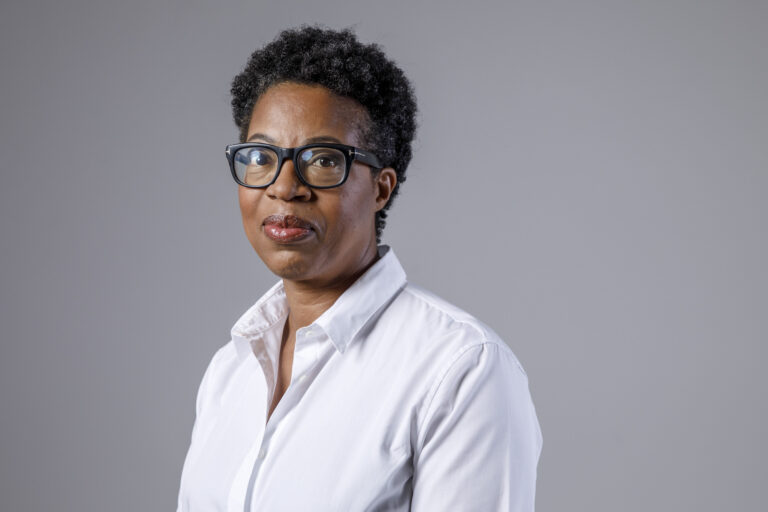

Lorna Clarke, Director of Music at the BBC, writes about the use of AI in music at the BBC.
Over the late May bank holiday, Radio 1’s Big Weekend brought 100,000 fans together in Sunderland to kick off the UK festival season where Olivia Dean – an artist who started with BBC Introducing, now a multiple Brit Award and Grammy winner – headlined on the Sunday night. More highlights follow this summer, from the BBC Proms (the world’s largest classical festival) to Radio 2 in the Park in Stirling this September.

These events remind us that music is more than sound; it’s the shared connection between artists and audiences. The songs we love often reflect real experiences and emotions, linking us through universal themes of love, loss and joy. Our relationship with music is deeply human – built on creativity, performance and connection.
This matters not just culturally but economically. The UK music sector contributes billions, supports hundreds of thousands of jobs, and shapes how the UK is seen globally. A thriving music scene benefits us all.
What happens when artificial intelligence can create songs at the click of a button?
AI in music isn’t new – tools have long helped with mixing, mastering and autotuning voices. But generative AI marks a step change, now able to create complete songs with lyrics in seconds. And some of this music has already gained millions of streams.
This shift has sparked both excitement and concern. For some, it opens new creative possibilities; for others, it risks undermining the artists and human creativity it often learns from. Questions around consent, copyright and fair reward also remain unresolved.
Of course, the history of music is the story of the deep relationship between artists, creativity and technology – think of the electric guitar and the synthesizer, or even techniques like sampling, or the artists who have turned technological possibility into art – composers like Delia Derbyshire and Steve Reich exploring electronics and tape machines, Jimi Hendrix or Anna Calvi on guitar; Kraftwerk or Depeche Mode with synthesizers; Coldcut or J Dilla with sampling. Artists across generations have embraced these tools to push creative boundaries. Even so, new technology has often sparked anxiety. In the 1980s, fears about synths and drum machines led to calls to ban them, with some artists proudly rejecting their use.
Today’s debate around generative AI echoes those concerns, but at a far greater scale. Can AI create truly great music? What does it mean for artists? And how do we ensure fairness for those whose work underpins these AI models and tools?
While there are no easy answers, one constant remains: creativity, artistry and musicians’ rights matter.
They matter deeply to the BBC. Music and musicians have been central to our identity for 100 years. We support artists, champion new talent, and bring curated music to millions each week. In an age of algorithms and automation, the BBC remains committed to human creativity.
As the role of AI in music evolves, it’s important to reflect on how the BBC approaches AI-generated music content across our radio stations and platforms. Our starting point is clear: the BBC’s AI principles – prioritise talent and creativity, be open and transparent and we’ll act in the best interests of the public.
Human creativity
Our priority will be music which is the result of meaningful human creativity – the substantial creative effort and distinctive creative choices of artists.
Artists using AI tools will be considered in our programming – as we expect more to experiment with and adopt this technology over time – but these tools must be used to support human creativity and should not replace a person’s work in developing, shaping or expressing the creative idea itself. For example, simply prompting, generating, selecting, or lightly modifying AI outputs is unlikely to represent meaningful human creativity.
Transparency
Our research shows that audiences care about musicians and human creativity and may want to know when AI has been used to support the creation of the music they are listening to. We are committed to flagging such uses of AI to our listeners in line with our AI transparency approach, which is informed and shaped by our audiences’ expectations.
To do this, we now require artists and partners submitting their work to us be transparent about whether and how they’ve used AI in that work. This transparency from artists and the industry, in conjunction with the expertise of our producers, will help us assess how AI has been used and guide our editorial decisions. We are not asking that musicians do not use AI tools to support the creative process, just that they tell us when and how they’ve used them.
This highlights the importance of collaboration and trust with both our industry partners and the music making community.
Respecting rights
Copyright law sits at the very heart of how we license music in our programmes and is the foundation of how the BBC materially supports the UK creative economy. We will always respect the rights of composers, artists, other creators and contributors when we make editorial decisions and would never knowingly broadcast AI-generated music that infringes existing copyright works.
Taken together, this means our producers, brands and stations will continue to consider each track based on its creative merit and whether it is right for our listeners. We believe this approach allows us to reflect the innovation and experimentation that is natural in the world of music, while firmly prioritising and standing by the human creative work that is paramount to our cultural and economic life.
We know this is not the end of the conversation. As the role of AI in music evolves at an incredible speed, we will also continue to evolve our position, while still honouring the precious relationship between artists and fans, between presenters and listeners, and the unique position the BBC holds within the UK music scene.
This was first published on the BBC’s Media Centre on July 6th 2026.