

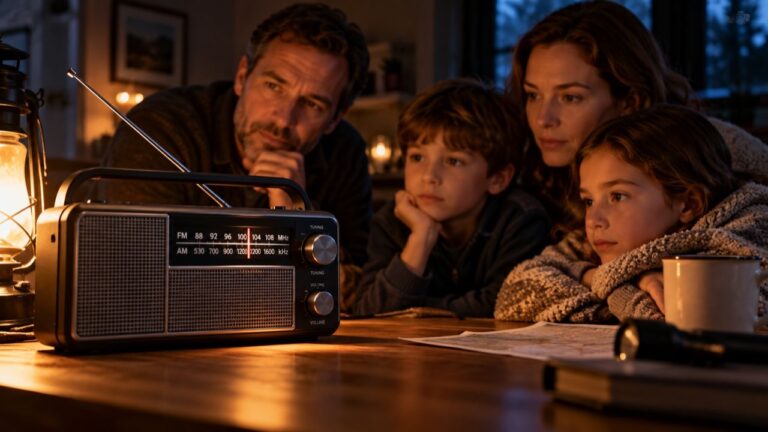


Sales of radios have increased by as much as 160% after the Government encouraged households to keep a battery-powered or wind-up FM radio for emergencies.
The advice forms part of the new Be Ready campaign, which encourages people to prepare for power cuts, severe weather and other situations where mobile networks or internet connections may be unavailable.

Retailer Robert Dyas has reported a 160% increase in radio sales compared with the previous week, while Maplin says sales have risen by 92% compared with the same period last month.
Government research suggests just 23% of people have an independently powered FM radio at home, excluding radios in cars and mobile phones.
The renewed interest in FM comes as digital listening continues to dominate the UK radio market, with broadcasters increasingly relying on DAB, smart speakers and online streaming.
However, the Government’s emergency checklist specifically recommends FM, rather than DAB, despite many stations now broadcasting exclusively on digital platforms.
The advice could therefore encourage consumers to buy analogue-only receivers, rather than sets capable of receiving both FM and DAB+ services.
There is also no single national emergency radio frequency identified in the guidance. Instead, households are encouraged to make a note of the frequencies of local and national radio stations they use for news.
In June, Rhodri Talfan Davies told a House of Lords committee that the BBC would concentrate emergency information on two major radio frequencies during a national power outage, while retaining the ability to provide localised broadcasts on FM and DAB.
No further details of which frequencies were provided, but we’ve asked the BBC if they can share any more information.